What I Learned About Fire Damage Restoration When My Neighbor's House Burned
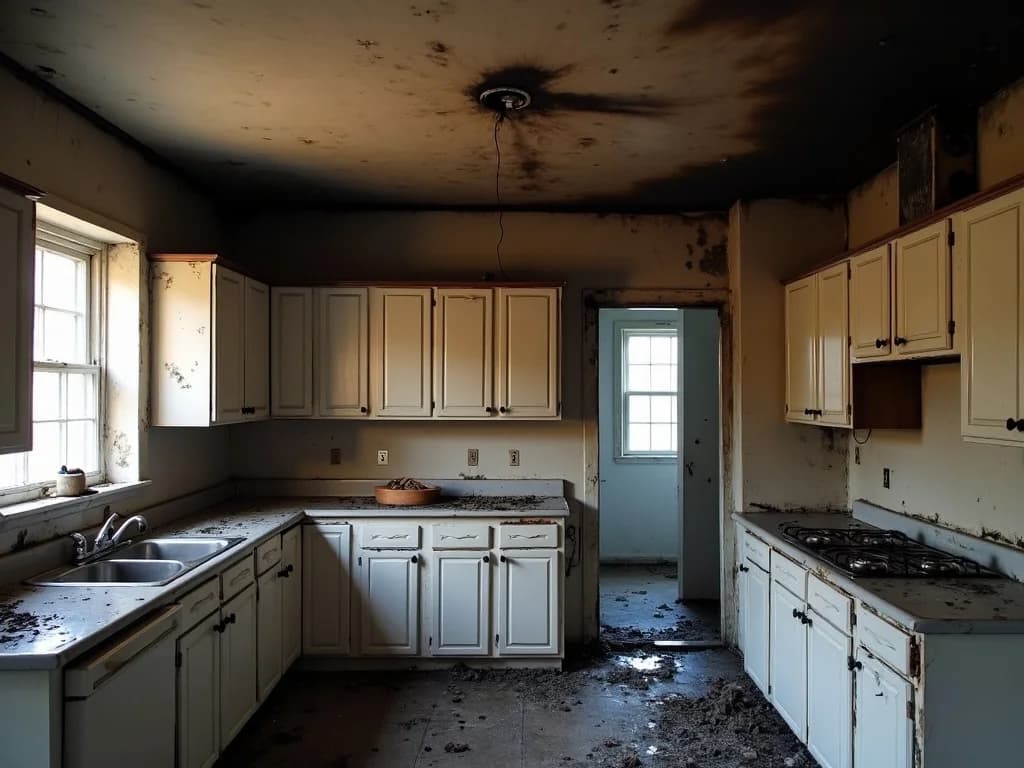
January 2024. My neighbor in Summerlin had an electrical fire, a short in the garage panel. The flames never left the kitchen. Smoke was a different story. It worked through every room in under four minutes. When I walked through two days later, the soot smell hit me from the sidewalk. His insurance company offered $11,000. The work cost $38,000. I had already been through my own $34,000 water damage and mold disaster in 2022, so I knew what it looked like when the process goes wrong. I watched the exact same thing happen with fire.

Written by David Reyes, software engineer, Summerlin. I build websites, not houses. But I have been through enough restoration disasters to know what the process actually looks like.
Last updated June 2026
The $27,000 Gap Between the Insurance Offer and the Real Cost
My neighbor received his insurance offer one week after the fire. $11,000. That covered the burned kitchen section and some paint. It did not include HVAC cleaning. It did not include subfloor replacement where the extinguisher water had soaked down to the slab. It did not cover drywall in the two rooms where smoke had penetrated deep enough that surface cleaning was not going to work.
The final number was $38,000. He accepted the first offer because he did not know he could negotiate. He did not know he had the right to choose his own contractor. He did not know that public adjusters exist, people who work for the homeowner, not the insurance company. As a software engineer, this drove me crazy. It was like deploying to production without reading the error logs. The information existed. He just did not know where to look. I learned all of this after my own disaster in 2022, when I lost $34,000 to mold that grew inside my walls after a monsoon flood. I was too late to help my neighbor with the fire. What I can do is write down what I learned so the next homeowner does not repeat the same mistake.
If you are reading this after a fire, the most urgent thing is not the rebuild. It is the documentation. Photograph everything before anyone touches anything. Shoot video. Your phone's timestamps become evidence when the adjuster questions the scope of damage.
What Fire Restoration Actually Costs in Las Vegas
These ranges come from restoration estimates I reviewed while building this site. The gap between low and high in each category usually comes down to whether smoke damaged the HVAC system and whether the subfloor needs replacement.
| Damage Level | Estimated Cost | Typical Timeline |
|---|---|---|
| Smoke damage only (no structural fire) | $2,000 – $6,000 | 1–2 weeks |
| Moderate fire (1–2 rooms, some framing) | $10,000 – $40,000 | 1–3 months |
| Major structural fire (multiple rooms) | $40,000 – $100,000+ | 3–6 months |
| Total loss rebuild | $150,000+ | 6–12 months |
Nearly all fire damage falls under standard homeowner's insurance in Nevada. The real question is not whether you are covered. It is whether the initial offer reflects the actual scope of work. In my neighbor's case, it did not.
I built a room-by-room cost breakdown from actual contractor estimates if you want the granular numbers.
What Happens After the Fire Trucks Leave
The fire trucks leave and you are standing on the sidewalk staring at your house. The instinct is to go inside. Do not. Weakened ceilings collapse hours later without warning. Wait for official clearance.
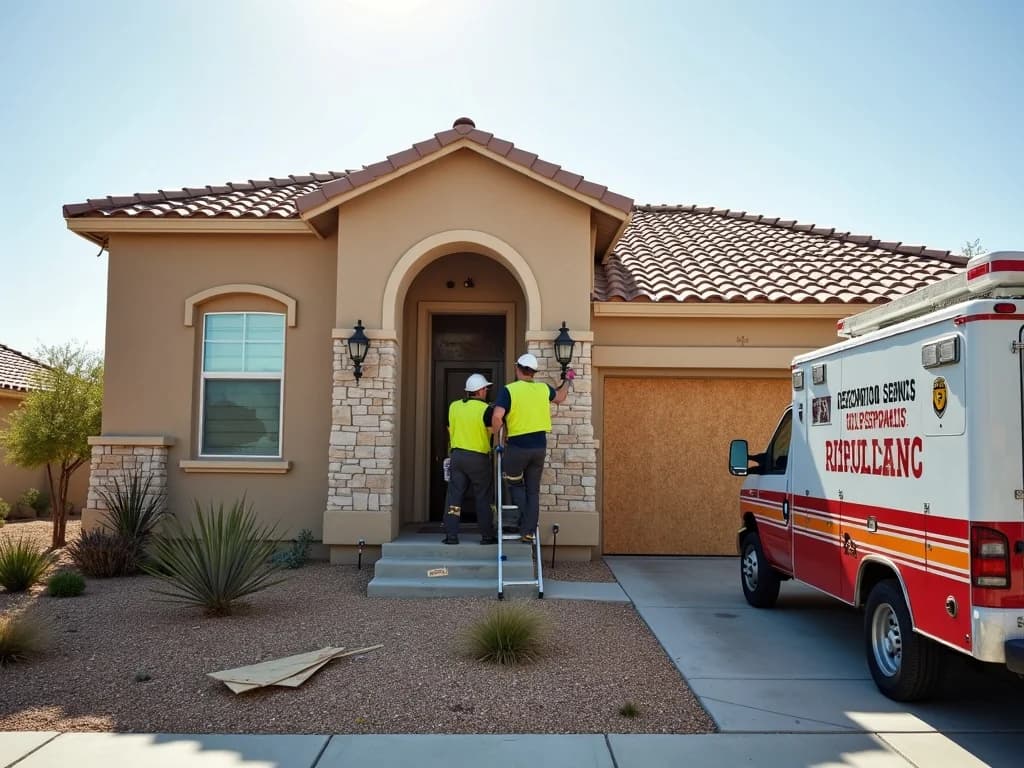
Your next call is for emergency board-up. Every hour the house sits open, the damage grows. Winter nights in Las Vegas drop to the mid-30s. Wind-blown sand and dust embed into soot-covered surfaces. Theft at properties with broken windows is a documented problem in the valley.
After board-up comes hazardous material testing. Asbestos and lead paint, mandatory in pre-2005 homes. Then pack-out: moving salvageable belongings to an off-site cleaning facility. Then air scrubbers. All of this happens within the first two to three days.
Days four through seven are smoke remediation. HEPA vacuuming on every surface. Chemical sponges on walls and ceilings. Ozone or hydroxyl treatment for what manual cleaning cannot reach. I spent a weekend reading IICRC S520 standards after my neighbor's fire (because that is what I do; I debug things). The part that surprised me: full HVAC cleaning is not optional after a smoke event. In Las Vegas, where forced-air systems push air through every duct in the house, smoke circulates into every room within minutes. If the ductwork is not cleaned, the smell comes back the first time you turn on the AC.
Week two tackles a problem that connects directly to my own experience: water damage from firefighting hoses. That water soaks through drywall, insulation, and subfloor. In desert conditions, moisture trapped behind walls grows mold within 48 hours. That is exactly what happened to me in August 2022 with a different kind of flood, and it is what ended up costing me $34,000. Crews remove what cannot be saved, then begin structural drying using industrial dehumidifiers and high-volume air movers. Dehumidification in a Las Vegas home typically runs three to five days because the slab holds heat and slows moisture release. You can read more about that risk in our mold guide and our water damage guide.
Then comes reconstruction. Framing, electrical, plumbing, drywall, finishes. If the company that did the cleanup is not the same company doing the rebuild, you lose one to two weeks in the handoff while the second crew assesses what was already done. That is what happened to my neighbor, and it is one of the reasons his project dragged on as long as it did. In our contractor directory, we flag which restoration companies hold a General Contractor license (can do both phases) and which only handle one side of the scope.
Why Smoke Costs More Than Flames
My neighbor's fire burned maybe 40 square feet of kitchen. The smoke damaged 1,800 square feet of house. It always works this way. Flames destroy a contained area. Smoke disperses through the entire structure via ducts, under doors, through the attic.
Soot particles measure less than 2.5 microns. They work their way into drywall texture, carpet pad, electrical outlets, and every seam along the vent registers. Running a cloth over them drives the particles further in rather than lifting them out. That is why DIY cleaning efforts fall short, and can occasionally leave surfaces in worse condition than before.
Professional smoke remediation is a three-to-seven-day process. HEPA vacuuming, chemical sponges, hydroxyl generators, ozone fogging. None of those tools are available at Home Depot. Many homeowners find out that their cleaning efforts did not work only when they turn on the AC weeks later and the smell returns. In Las Vegas, where the AC runs eight months a year, that means the smell lives with you almost permanently if the ductwork was not treated.
I wrote a separate piece on how smoke damage insurance claims actually work after watching my neighbor argue with his adjuster for three months.
And if you want to see what a real fire restoration looks like start to finish, I documented the lessons from the UNLV campus fire.
Why Fire Hits Las Vegas Homes Differently
Relative humidity in Las Vegas averages 10 to 15 percent. At that level, the structural wood in your house loses moisture content and ignites faster. Fires burn hotter and spread through wall cavities before you smell smoke in the next room.
Then there is the wiring. Thousands of homes built during the 2003 to 2007 construction boom are now over 20 years old. As of June 2026, those panels are showing their age in ways that inspectors are flagging with increasing frequency. Connections loosen. Circuits overloaded by home offices (a trend that exploded after 2020) push aging panels past their rated capacity. According to the Nevada State Contractors Board, electrical failures are the second-leading cause of residential fires in the valley.
And there is something most people do not consider: the stucco illusion. Stucco exteriors look fire-resistant. They are not. Behind that shell is wood framing. When flames reach it through a window or attic vent, fire races through wall cavities with almost no resistance. From outside, the house looks intact. Inside, the structure may be compromised.
Communities along the western valley edge, from Summerlin South to Blue Diamond, also face wildfire risk. Wind-driven embers travel over a mile. The 2023 Harris Springs fire in the Spring Mountains burned over 400 acres less than 15 miles from residential neighborhoods.
What I Would Tell My Neighbor If I Could Go Back to January 2024
First: do not accept the initial insurance offer. It is a starting point, not a final number. You have the right to have an independent public adjuster review the scope. In Nevada, public adjusters work for the homeowner, not the insurer. They charge a percentage of the difference they recover, so they only earn if you get more. I wish I had known that for my own water case in 2022 too.
Second: choose a contractor with a General Contractor license (Class B), not just a cleaning specialty. If the cleanup company and the rebuild company are different, the handoff adds weeks. Verify any license at nscb.nv.gov before signing anything.
Third: insist on photographic documentation before any cleaning starts. Once surfaces are remediated, the evidence of smoke damage disappears. If your insurer later disputes something, you have nothing to back up your position.
Fourth: ask about the HVAC. If the company does not mention ductwork as part of the scope, ask them directly. If they say it is not necessary after a fire that involved smoke, find a different company. That answer does not make sense in a forced-air home.
The Insurance Part Nobody Explains Well
Homeowner's insurance in Nevada covers nearly all fire damage: structure, personal property, additional living expenses while displaced, and debris removal. That is not the problem. The problem is the amount.
The initial insurance offer is almost always low. Not because they are malicious, but because their estimate is based on what is visible in the adjuster's photos. Smoke inside the ducts, moisture behind drywall, subfloor contamination: none of that shows up in a quick visual inspection. Think of it like code coverage. The adjuster tested the happy path (visible damage), but the bugs are all in the edge cases (hidden moisture, contaminated ducts, structural weakening behind intact-looking walls). A restoration contractor with insurance experience documents those hidden layers with particle meters, thermal cameras, and Xactimate software (the standard insurers use). That changes the numbers.
The full process of navigating a restoration insurance claim in Nevada is its own rabbit hole. I broke it down on our insurance claims page.
One Thing I Still Don't Know
After more than a year spent studying fire restoration from every angle, I still have no reliable way to tell in advance whether an insurance claim will move smoothly or turn into a prolonged dispute. I have watched two kitchen fires in nearly identical Summerlin homes unfold in completely different ways: one wrapped up in six weeks, the other dragged on for five months. The outcome depends on the adjuster assigned to your file, the contractor you bring in, and whether someone captured the hidden damage (ducts, subfloor, wall cavities) with documentation before anyone started cleaning. The one pattern I can point to with confidence: homeowners who photographed and recorded everything from the very first day came out ahead, time and again, compared to those who left the process entirely in the hands of the insurance company.

Written by David Reyes
Software engineer in Summerlin, Las Vegas. Built VegasRebuild after losing $34,000 to hidden mold.
Fire Damage Restoration: Questions I Get Asked
Full cost breakdown: Fire Damage Restoration Cost in Las Vegas
Related: Water Damage Restoration · Mold Removal Las Vegas · M&M Restoration Profile · Contractor Directory
Comments
Recent Comments (35)
very thorough information
Kitchen fire last year from a grease pan. The smoke damage was way worse than the actual fire. It got into everything, even rooms that werent near the kitchen.
thx for the info
Had an electrical fire in our garage. Small fire but the smoke and soot cleanup took forever. Get a company that specializes in this, dont just hire a general contractor.
neighbor had a fire and I wanted to learn what they are going through
The HVAC contamination section is spot on. After our fire they had to clean every inch of ductwork. The restoration company found soot inside our furnace.
didnt know about board up services. good to know
This is really helpful. We just moved to Vegas and want to be prepared for any emergancy.
Lost our home to a fire 3 years ago. The rebuilding process takes forever but having a good restoration company makes all the difference. Interview at least 3 before you decide.
does renterss insurance cover fire damage?
Our dryer caught fire and it spread to the laundry room wall. Thank God we were home. Damage was about $15k to fix. Smoke smell took months to go away completely.
saved this. hope I never need it
useful breakdown of the costs involved
We had a small kitchen fire and thought we could clean it up ourselves. Bad idea. The smoke smell kept coming back until we hired professionals who did thermal fogging. Should have called them first.
good info for las vegas homeowners
my buddys house caught fire from a space heater. crazy thing is Vegas gets cold enough in winter to need them
Just went through the insurance claim process for smoke damage. It took 6 weeks but having documentation of everything really helped speed things up.
appreciate the honest cost estimates
Had to deal with fire damage in our investment property. The cleanup cost more than expected but the insurance adjuster was fair about it.
sharing with my family
Our candle caused a small fire on the dresser. The damage looked minor but the restoration company found smoke in the attic insulation too. Always get a full inspection.
the insurance section was really helpful
worked in restoration for 5 years. this article is accurate about timelines and costs
i need to get better smoke detectors after reading this
A firework landed on our patio furniture last 4th of July and caught fire. The house was fine but the patio cover melted and had to be replaced. Vegas problems.
good resource. straightforward and no fluff
been looking for this kind of info
We had fire damage and the company we hired subcontracted most of the work. Make sure you ask about that upfront.
great guide for vegas residents
Our kitchen fire happened right before Thanksgiving. The restoration company worked overtime to get us back in before Christmas. Will never forget that.
Electrical fire started behind our outlet in the home office. No visible flame, just smoke and a burning plastic smell. By the time we found it the wall cavity had been smoldering for a while. The firefighters said it was a cheap extension cord that overheated. The restoration company had to open up three walls to check for hidden char. Lesson learned: do not overload extension cords and replace anything older than 10 years.
Hidden smoldering fires are especially dangerous because people assume the problem is contained to what they can see. A good restoration company will use a thermal imaging camera to scan walls and ceilings for heat signatures even after the fire is out. If yours does not offer that, ask for it specifically. It can save you from a second call three weeks later when the hidden char finally causes a callback.
the section on smoke damage to furniture was eye opening. thought we could just air things out
We had a BBQ fire on the back patio that spread to the wood lattice and hit the eave of the house. The structure was fine but the stucco exterior and two sheets of roof sheathing had to come out. Took 11 days total. The restoration company filed everything with our homeowners insurance and we only paid the deductible.
useful. added this to my emergency info folder with the other numbers